
How does Navident Work?
Dynamic Navigation for Dental Implantation
The virtual patient’s jaw is created from the CT and, optionally, digital impression data, in seconds. The plan, including crowns and implants, is prepared in a few minutes and can be modified at any time. During surgery, Navident shows the advance of the drill tip or implant in the patient’s jaw relative to surrounding structures and the implantation plan.
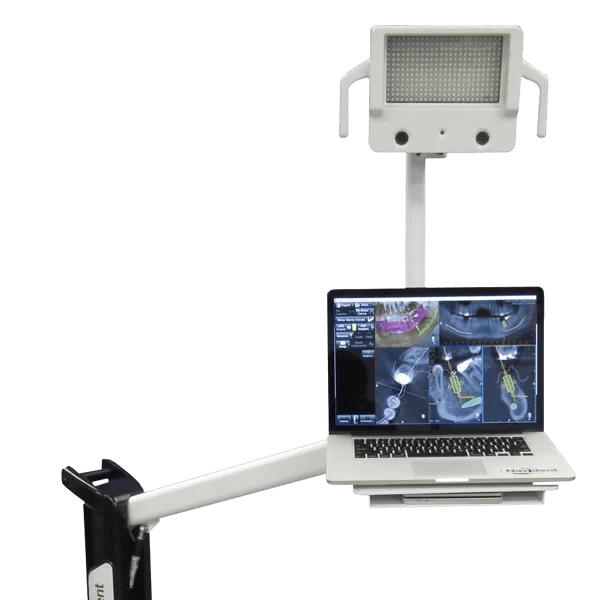
Benefits of Navident System
A breakthrough in computer-aided implantology, Navident offers dental surgeons an easy to use, accurate, highly portable, and affordable way to plan the desired restoration and implant placement on a virtual patient, then execute the plan on the real patient’s jaw
Let Navident help you be better
The dentist plan the restoration on-screen, optimizes the implant positions, then let Navient guide him to accurately implement the plan in the patient’s jaw.
Perform flapless surgery, leading to reduced patient discomfort, reduced risk of infection, and faster recovery. Avoid unintentional iatrogenic damage to nearby anatomical structures.
Leverage accuracy to reduce the need for custom abutments, bone augmentation, and re-work. Used retrievable screw-retained, rather than cement-retained, superstructures.
Treatment Alternatives
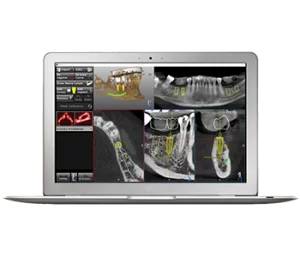
The restoration and implant placement plan is created using the CT image data, optionally with added intraoral scans or any other surface data (STL files). The plan can be modified at any time, even during surgery. Navident is compatible with any implant size and type available on the market.
Zygomatic dental implants are implants that are much longer than conventional implants (40 mm – 50 mm), and are placed in the dense Zygoma bone or otherwise known as the cheekbone.
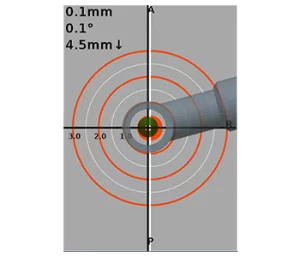
Following a brief drill or implant calibration, Navident dynamically presents the deviation between the actual/planned position and orientation of the drill/ implant, guiding the surgeon to accurately implement the plan.