Snap-on Dentures
Snap-on Dentures in Morocco
A revolutionary way to attach your Current Dentures that requires no messy pastes and adhesives
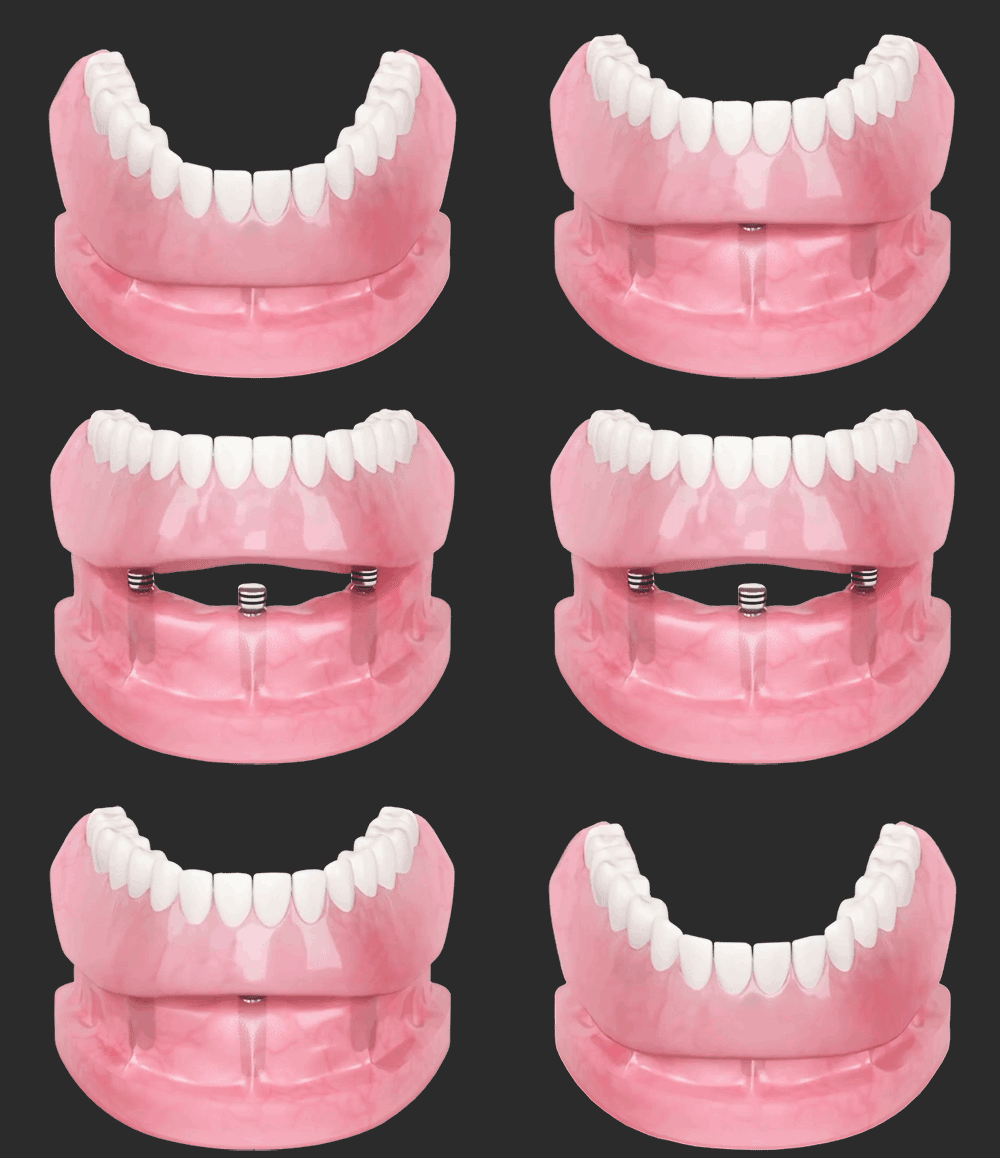
Snap-on Dentures in Morocco consist of dentures that “Click – Attach – Retaine”, onto Implants, this Implants can be Mini or Regular and can range from at least 2 to 8 Implants per arch.
Dental advances, new software, 3D Imaging, CAD/CAM, and advanced Dental Lab processes have made Snap-on Dentures a great option for edentulous patients. Exists several types of Snap-on Dentures restorations like Ball Abutments, Locators, Bar Retained, Fixed Hybrid Dentures. Our Dental Specialists and the next info will help you as a patient make the best choice in choosing the best implant for you.
Benefits to use
Snap-On Dentures
The stability to offer a Snap-on Dentures system is a major advantage as your teeth remain fixed and don’t slide or slip like regular dentures.
Requires no messy pastes and adhesives to keep the appliance firmly in place.
Most people who replaced their removable dentures with fixed dentures increase their confidence and esteem, as they feel free to talk and smile in front of people, without worrying about their dentures becoming loose.
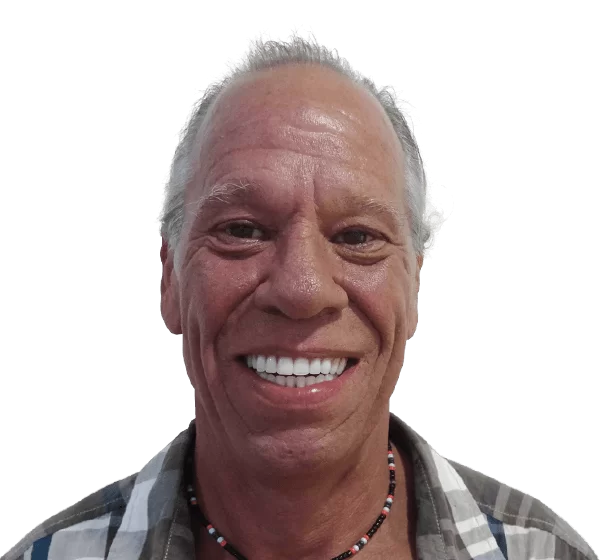
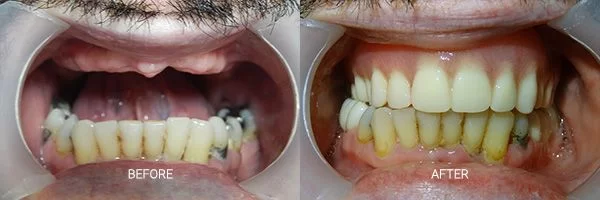
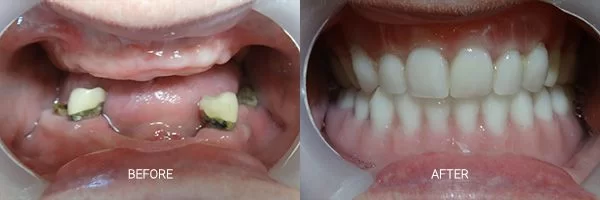
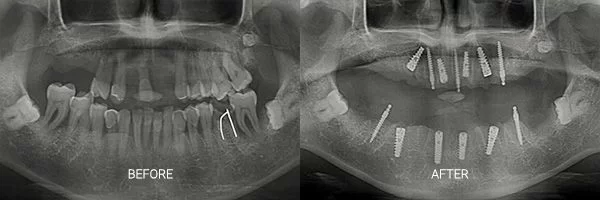
Snap-on Dentures in Morocco Before and Afters
Most treatments are provided in two trips of a 7 day stay in Agadir. Affordable Snap-on Dentures without compromise
Why get Snap-on Dentures in CDS
- CLINICAL BENEFITS
- ECONOMIC BENEFITS
- DENTIST QUALIFICATIONS
- EQUIPMENT & TECHNOLOGY
- QUALITY MATERIAL
Experience, expertise and innovation (more than 10,000 treatments).
U.S. licensed dentist and specialists in each area of dentistry.
Zirconia Implant Bridge – Prettau full arch best restoration available.
Largest equipped clinic in Mexico.
Protocols and streamlined processes for successful treatment in short time frames.
Solutions for all budgets and cases.
Proven success rates in excess of 93% – Full Mouth implant treatments.
The consultation fee includes 3D CBCT X-Rays, Periapical X-Rays, intra-oral scanning, surgical guides, models. We offer you a state-of-the-art facility with specific technologies to perform these treatments with precision in short time frames and even transportation from the airport, and to your hotel and appointments in Cancun.
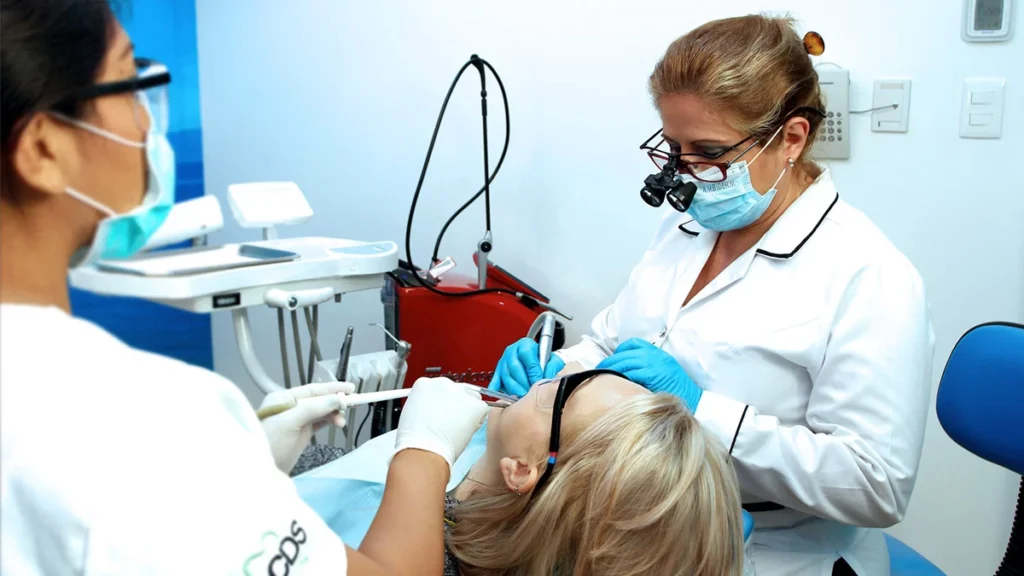
D.D.S. M.S. A.E.G.D. Irma Gavaldon is graduated from two of the top Dental Schools in North America: UNAM (Mexico’s most recognized college), and the University of Michigan, where she received her A.E.G.D. (Advanced Education in General Dentistry) in a two-year program, plus her Master’s Degree in Restorative Dentistry.
To diagnose, plan and execute your dental implants treatment accurately and in shorter times, our dental clinic has the following equipment: 3D CBCT Extra-oral panoramic X-Ray machine (a Carestream CS 9200 3D Machine), Intra-oral scanners, NAVIDENT, surgical guides, and our own full-equipped CAD/CAM laboratory.
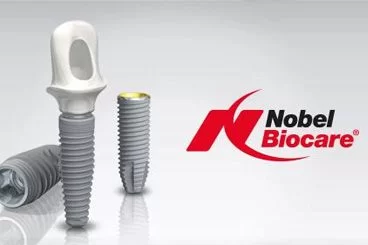
While most clinics abroad offer inexpensive dental implant brands, we only work with leading global brands like Nobel Biocare, Straumann, Bicon.
We are also the only clinic able to mill in-house titanium superstructures for porcelain layering, and even zirconia superstructures for implant-retained restorations.
Snap-on Dentures Cost in Morocco
4 Mini Implants - Snap on Denture
$3,000
USD per denture (Both Trips)
Surgical Phase
4 Mini Implants + Temporary Prosthesis
Restorative Phase
Snap on Denture + Accesories
(upper or lower)
4 Regular Implants - Snap on Denture
$6,760
USD per denture (Both Trips)
Surgical Phase
4 Mini Implants + Temporary Prosthesis
Restorative Phase
Snap on Denture + Accesories
(upper or lower)
6 Mini Implants - Snap on Denture
$4,200
USD per denture
Surgical Phase
4 Mini Implants + Temporary Prosthesis
Restorative Phase
Snap on Denture + Accesories
(upper or lower)
Possible Additional Costs
As a result of your initial evaluation, certain additional treatments might be necessary to complete your dental work, you can find the prices for them below:
- Possible Additional Tretments
- Pain Management and Medication
Simple Extraction
$60 USD per extraction
Surgical Placement of Implant body
$3,600 USD four implants
Bone Graft
$350 USD per CC
Reabsorbable Membrane
$100 USD per membrane
Aveloplasty / Bone Remodeling
FREE charge
Intravenous Conscious Sedation / Analgesic
$500 USD
Nitrous (Laughing Gas)
$250 USD
Local Anesthesia
FREE charge
Improve your Confidence and Smile Again !Snap on Dentures
Different Types of Snap-on Dentures in Morocco
- Bar Retained
- Locators Retained
- Ball Abutment Retained
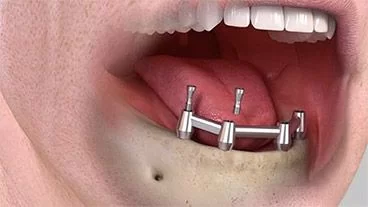
Bar Retained Dentures are “the best option for Snap-on restorations”. It requires regular implants as the dentist will screw a secondary bar into the implants. The most important thing is that the bar has a passive fit over the implants, we achieve this by fabricating the bar in-house lab with our CAD/CAM and Milling technologies available.
Require at least 2 implants and a maximum of 8. The bar is usually thin and runs along with your mouth over your arch retained by a screw and a connector onto the implants. Longer stretches of retention make it the least-mobile option for Snap in Dentures, the only downside to this treatment is that the attachment that goes inside the denture wears out and requires changing every year or so, some patients can change them out without the need of a dentist.
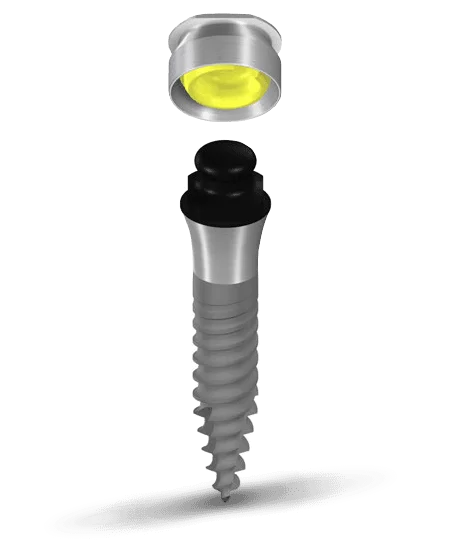
Locators Retained is a system that does not use the splinting of implants. This attachment is self-aligning and has dual retention and in different colors with different retention values. Locator attachments are available in different vertical heights, they are resilient, retentive, durable, and have some built-in angulation compensation. In addition, repair and replacement are fast and easy.
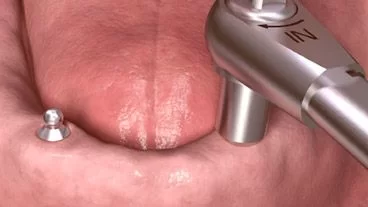
Ball Abutments are probably the most common attachment for Snap on Dentures. Can be used with Regular Implants and Mini Implants. Each implant in the jawbone holds a metal attachment that fits into another attachment on the denture. The attachments on the implants are ball-shaped (“male” attachments), and they fit into sockets (“female” attachments) on the denture. In some cases, the denture holds the male attachments and the implants hold the female ones.
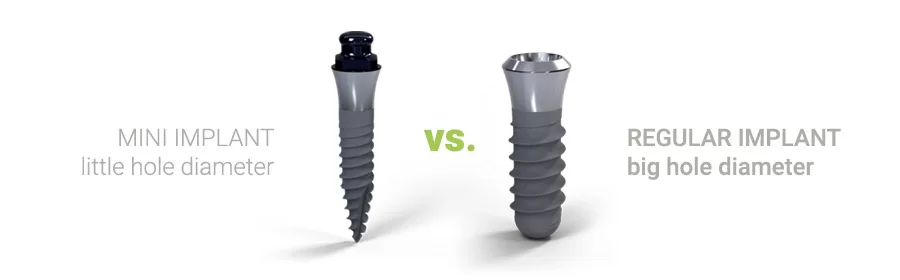
Mini Implants or Regular Implants?
For decades, Dentists have used Dental Implants to replace missing teeth, with a greater than 95% success rate. The small number of problems that can occur with dental implants are usually related to infection or cosmetic issues, which are treatable and correctable. As a result of the loss of a tooth, the bone in the jaw is also lost. This loss can lead to a collapse of facial bone and muscles, creating a turned-down mouth and sunken jaw look. The Implants actually stimulate bone growth and help to preserve the natural contours of the face.
We use Straumann implants, a global brand leader in implant, restorative and regenerative dentistry.
Mini Dental Implants
Titanium alloys are the main component of mini implants. These materials are strong enough to withstand normal chewing force and are a good alternative for immediate load and long-term restorations. Dentists used it for stabilizing dentures.
For stabilizing dentures Dr. Gavaldon recommends that about 6 Mini Implants be inserted in the front of the patient’s lower jaw and 6 to 8 on the upper jaw.
For placing implants in an extraction site, in most cases, it is in the patient’s best interest to use a traditional implant to help preserve the bone and promote better Osseointegration.
The chewing force applied from a crown would overwhelm a Mini Implant and put way too much pressure on the bone. Since Mini Implants require a proper amount of bone to support them, they cannot be used in the area of the jaw with inadequate vertical bone or if there has been too much bone loss.
Regular Dental Implants
Traditional Implants are cylinders or screws made of titanium that act as anchors, replacing your natural tooth roots. They can use for the upper or lower jaw, these implants are directly attached to your jawbone and gum tissue. Regular implants eliminate the hassle of removable dentures, and they look, feel, and function like natural teeth, allowing you to eat the foods you love, speak and smile with more confidence.
However, these implants also require sufficient jawbone tissue for support. Patients with jawbone atrophy may not qualify for traditional implants without a preliminary Bone Graft.
Traditional Implants feature two pieces: a post and an abutment. The abutment serves to connect the implant to the restoration.
If you require a preliminary Bone Graft or Sinus Lift, you must wait for 6 to 9 months for your jaw to heal before implants can be placed. After Traditional Implant surgery, you must wait an additional three to six months for the posts to integrate with surrounding tissue before you can receive your restoration.
Am I a Candidate for Snap-on Dentures?
Dental Implants require uncompromised bone structure to support them. Your Dentist will determine the quality of your jaw’s bone structure by reviewing your past medical history. Also, he will check your current medical status, and recent X-Rays and CT Scans.
In general, anyone with a healthy mouth can get Dental Implants. Patients into their 90s have been successful implant recipients in the past.
There are some major contra-indicators, however:
- Smoking is a big one. Smoking greatly increases the risk of periodontitis or gum disease. This risk is just too high when undergoing such a major oral surgery.
There’s also the fact that prolonged smoking can cause serious damage to gum tissue, because:
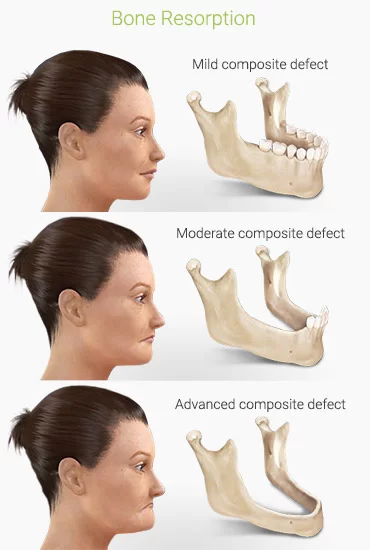
- The gum must be in good condition to get dental implants. Severely diseased or damaged gums simply aren’t going to support the implant properly. There must be sufficient bone volume. Over time, the bone volume is lost. This is a natural process as we age.
- If we have teeth extracted, the bone volume in our jaws will shrink fairly rapidly, regardless of our age. Combined, there are many patients who don’t have enough bone volume in their jaw to fully support the dental implants.
- For some of these patients, bone augmentation and bone grafts can sometimes be successfully used to achieve the necessary result.
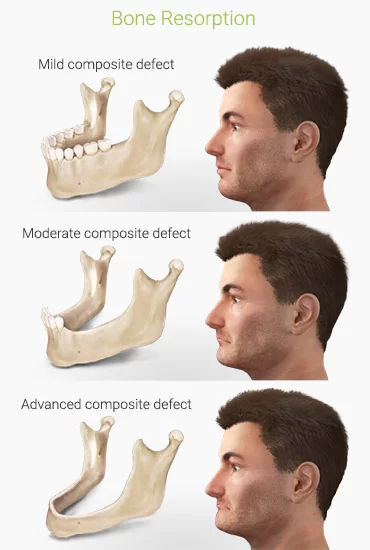
Your dentist or surgeon will assess whether you’re a suitable candidate for Bone augmentation or Grafting. There are also various health conditions and medications which would normally preclude someone from any sort of major surgery, or put them at risk. Any relevant medical conditions and medications need to be made known to your dentist during your consultation.
Dental Implants Pre-Op Instructions before coming to Agadir
Before surgery (three weeks)
Smoking and dental implants don’t go together. Smoking Is The Main Factor For Dental Implant Failure? We know smoking can be difficult to quit but we insist that patients stop smoking at least three weeks before their dental implants. On unusual occasions, we would ask you to stop smoking sooner, because it can interfere with your recovery, by reducing blood flow, which may prevent the incision from healing. We Highly Recommend You Quit Smoking Once You Commit To Your Dental Treatment
Before surgery (three weeks)
We know you will be on vacation and the all-inclusive bar might be tempting. You must stay away from any alcoholic beverage for a minimum of five days before your procedure. Alcohol causes increased bleeding, and the chances of infection, as well as depress immune functions and might interfere with wound recovery.
Before surgery (three weeks)
Please check with your physician about suspending any medication prior to arrival. We Have No Knowledge Of Your Medical History Prior To Your Arrival To Cancun It Is Very Important You Contact Once Of Our Dental Coordinator And Let Them Know What Medicines You Are Taking. Sometimes We Will Ask For A Letter From Your Physician To Suspend Certain Medication During Procedures Or Healing Process
Before surgery (three weeks)
It is essential that you maintain a healthy food plan. You will be on a soft mechanical diet or modified and adapted to your surgery, so you must follow these instructions. Get protein supplements like Ensure or Boost, as well as soft foods like well-cooked pasta, yogurt, eggs, broths, and soup. We will provide you with a list of dietary suggestions in your post-op packet as well.
Before surgery (three weeks)
- You must consult with your physician before discontinuing any medication.
- All anti-inflammatory drugs for arthritis (remember to consult your physician).
- Any kind of anti-coagulants.
- Vitamin E took internally.
- If you have any doubt about these medications, please contact us
Before surgery (two weeks)
During this period, we recommend you to take:
- A multivitamin tablet – daily (most multivitamins contain some form of vitamin E, however, this is suitable to take before surgery. We will ask to avoid taking any extra vitamin E).
- Vitamin A – twice a day: 8,000 to 10,000 units (this has well-documented beneficial effects on surgical healing and also will help your immune system).
- Vitamin C – two times a day: 1,000 mg (after your surgical procedure your need for vitamin C will increase, and it is important for collagen synthesis, which helps to wound recovery).
- Pineapple enzyme – twice a day (you find it on health food stores and it is a great help to relieve the swelling related to a surgical dental procedure. This anti-inflammatory promotes healing).
Before surgery: One week, until two weeks after surgery
You must eat:
- On each meal: a small amount of protein.
- Daily: three green vegetables and two fruits (according to diet instructions).
- Frequently: healthy meals.
IMPORTANT! Your food plan can useful resource for healing remarkably and decreasing swelling and pain.
Before surgery: One week
- You may begin taking a topical anti-inflammatory every eight hours as directed and continue for 10 days.
- Every 12 hours between meals, take pineapple enzyme as directed (it is an anti-inflammatory and helps to heal). Fresh pineapple is a good alternative.
Dental Implants Pre-Op Instructions before coming to Agadir
Standards of good oral hygiene are critical for the success and functionality of the implants and restoration. The best way to prevent infection and ensure healing is to keep your mouth clean. Clean your mouth thoroughly after each meal beginning the day after surgery. Use a soft-bristle toothbrush and toothpaste after meals and at bedtime. The use of a dental Waterpik is highly recommended to irrigate underneath the denture to flush out debris.
After a dental implant surgery is normally pink or blood-tinged saliva for two or three days and does not indicate any problem, even minimal bleeding is expected. In this case, the best way to stop it is by placing a damp piece of gauze and softly biting for 30 minutes while rest keeping your head elevated. In case the bleeding continues, repeat the gauze step for an additional 30 minutes. The suture material may last from two to three weeks, and you should not pull or cut the sutures by yourself.
After any surgery, swelling is a normal reaction of the body and the first step to healing. In the beginning, swelling will not become visible until 24 hours after your dental implant surgery, and couldn’t reach its peak for two or three days. After this period, the swelling decreases but may persist from seven to 10 days. You can minimize swelling by applying immediate ice packs to the outside of the face for 20 minutes on, and then 20 minutes off while awake for the first 24 hours.
First of all, remember that all medications must be prescribed and should not exceed the recommended dosage. Because most oral surgery is followed by some amount of discomfort, the surgeon may suggest taking any anti-inflammatory, non-steroidal medication (only if YOU ARE NOT ALLERGIC to it), before the local anesthetic wears off. In case of intense pain, you should require calm pain medication under prescription, which will cause you to feel drowsy, so you shall not operate any mechanical machinery or drive while taking the prescription. About the post-operative antibiotics, they must be taken as directed and the entire course of the prescription. For the first weeks after your dental implant surgery, you could also be prescribed an antibacterial mouth rinse which must be used two times a day.
We suggest starting with liquids, after a general anesthetic or conscious IV sedation, and must avoid hot meals or hot liquids while numb. The limited food intake that is required for the first days could be compensated by increasing the fluid intake, with high protein shakes to replace meal supplements. For the first six weeks you must follow a soft chew diet, so if you cannot cut easily any food, please avoid eating it.
48 hours after your dental implant surgery
For the first 48 hours after your dental implant surgery, you must rest and relax without any physical activity. After these 48 hours, you should resume activity as tolerated.
Eat:
- Gelatin
- Yogurt
- Pudding
- Cream of wheat / Oatmeal
- Mashed potatoes
- Soups
- Ice cream
- Cottage cheese
- Applesauce
- Scrambled eggs
- Fish
- Pasta (well-cooked)
- Pancakes
Drink:
- Water
- Popsicles
- Protein shakes / Smoothies
- Juice
- Milkshakes
When numbness is gone you can increase diet as tolerated by adding soft food
- Try to keep your lips moist with special ointments (such as Vaseline) to avoid the corners of your mouth drying and cracking.
- Sore throats and pain when swallowing are not uncommon. The muscles get swollen and the normal act of swallowing can become painful. This will subside in 2 to 3 days.
- Stiffness of the jaw muscles may cause difficulty in opening your mouth for a few days. Do not force your mouth open. Massage the muscles and apply moist heat.
- With upper jaw implant treatment, you may develop bleeding from the nose. This is usually a temporary finding and will not persist past 2 to 3 days. Avoid blowing your nose for several days.
- An appointment with your general dentist may be needed within a few days of surgery to make any adjustments to your temporary denture.
- Your case is individual as no two mouths are alike. Discuss all questions or concerns with your oral surgeon or implant coordinator.
Patient Testimonials
Please watch what our patients have to say regarding their Snap on Dentures in CDS
Snap-on Dentures FAQs
This is type of denture is fitted to a surgically placed titanium Implant by means of a ball abutment and a housing and O-Ring. They are considered removable dentures as they snap on and off as many times as needed to maintain good oral hygiene.
In most cases, a Full Mouth Restoration with Snap-on Dentures will be completed within 2 trips of 6 months apart. Once you have completed a full evaluation with our specialists a more constructed treatment plan and time will be presented to you.
This is called “immediate load” and it is possible for people who are candidates. You must have very good bone quality but even then, we cannot tell if you are eligible for an immediate load until the actual surgery.
If it is possible and this is what you want then we will do so, but if the risk of failure is too high we will not risk it. We want the best outcome for your case.
Yes, the implant needs time to integrate with the bone before we can rehabilitate it. This usually takes about 4-6 months.
If you cannot come back what we can do is send you home with the corresponding abutment so you can have it placed at home when you are ready.
Our clinic is a specialty clinic, so you will be dealing with our Maxillofacial surgeon and implant specialist Dr. Javier Paz.
Dr. Gavaldon is our restorative specialist and the one who will be restoring your implants.
Dr. Javier Paz has many years of experience in oral surgeries and has had great results in the time he has been with us.
We Guarantee our work for 5 years. If there is a problem that arises due to a fault on our end we will replace the implant at no cost.
We work with Noble Biocare, Straumann, Implant Direct, and MIS. All of these implants are full titanium and are from known and well-respected brands. These are the same implants that the U.S and Canadian dentists use, and are not some cheap material.
Yes, we can place your dental implants after extracting your teeth, but it would depend on your remaining bone structure after extraction. In a lot of cases, we will place the bone graft and implant after extracting the tooth.
We would have to see an X-ray to determine this for certain. In these cases, some bone grafting and the membrane are usually required.
We use good quality material on our dental implants, so unlike some other clinics in Cancun, we cannot slash our prices.
We also provide all of your transportation once you arrive in Cancun so that you do not have to spend extra cash on taxis and buses.
Also, keep in mind that our prices are all-inclusive, so we do not charge you for periapical X-Rays, consultation, dental-related tests, specialist fees, taxes among others.
Treatment Alternatives
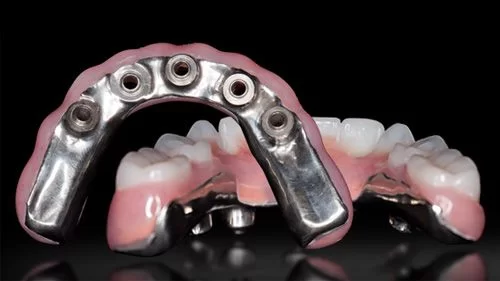
Fixed Hybrid Dentures are an ideal solution to Implant Supported Dentures. These Dentures can be used with as few as 4 Implants, keeping in mind that the more Implants the patient has, the better stability and load distribution the denture will have. These final Dentures are made for a patient on the restorative phase of the Implant process, once the Implants have been osseointegrated properly.
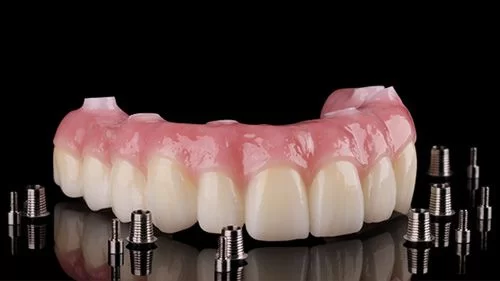
For patients looking for a more durable option for their final Implant-Supported Restoration, the option would be a Full Bridge of Zirconia. Here in our Clinic we use Zirconia from Zirkonzahn and are able to design and mill a Full Prettau Bridge to be Supported by Implants.